Health & Safety Policy — House Clearance Hornsey
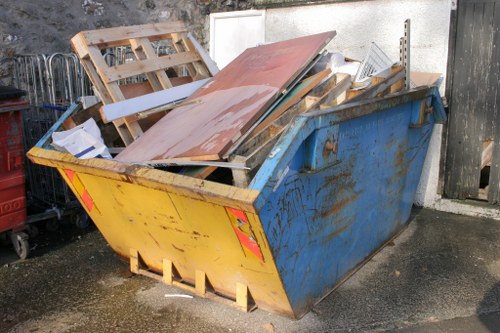 This Health and Safety Policy sets out the commitments and working standards of the company when providing House Clearance Hornsey and associated waste services. It is intended to protect employees, contractors, clients and members of the public from harm while ensuring that all rubbish removal and domestic clearance work is carried out lawfully, responsibly and with due regard for environmental and health obligations. The policy applies to all house clearance, bulk rubbish removal, waste clearance and related activities undertaken across our service area.
The organisation recognises its duty to assess and control risks arising from manual handling, lifting, vehicle operations, electric and battery items, and the presence of potentially hazardous materials. Our approach is precautionary: work will be planned, assessed and supervised to reduce preventable injury, exposure and damage. Staff will follow documented procedures for on-site safety checks and handover during multi-team clearances.
 All staff and contractors engaged in house clearances and rubbish removal Hornsey activities receive training that is relevant to their role. This includes instruction in safe manual handling, the correct use of personal protective equipment, awareness of hazardous waste categories, and safe use of tools and lifting aids. Competence assessments and refresher training are scheduled at regular intervals to maintain performance standards.
Responsibilities and Roles
Management retains overall responsibility for implementing this policy and ensuring compliance with safe working standards. Supervisors are responsible for daily risk assessments, site briefings and ensuring that teams have appropriate equipment and PPE. Employees must take reasonable care of their own health and safety, follow instructions, and report hazards or incidents without delay. Visitors and third parties should be given clear instructions or escorted when on site.
 Before any house clearance job begins, a written or recorded risk assessment is conducted to identify hazards such as sharps, asbestos-containing materials, contaminated waste, electrical appliances, liquids and biological contaminants. Where hazardous items are present, removal will be handled by qualified personnel or specialist contractors in line with best practice for waste handling.
Safe systems of work are documented and include lifting techniques, two-person lifts for heavy or awkward items, use of mechanical aids (trolleys, hoists), secure loading of vehicles, and traffic management where clearances affect public footways or driveways. House clearance services are scheduled to minimize overlap with public access and to keep manual handling exposures within safe limits.
Personal Protective Equipment and Hygiene
PPE is provided as required and includes gloves, hi-visibility clothing, safety boots, eye protection, and respiratory protection where dust or biohazard exposure is possible. Staff must wear PPE as instructed and maintain it in good condition. Equipment checks are recorded and defective items are removed from service immediately. Good hygiene practices are promoted on site including hand washing and the provision of hand-cleaning facilities and sanitiser.
Waste segregation and containment protocols reduce the risk of cross-contamination and exposure to hazardous substances. Sharp objects are placed in suitable sharps containers; liquids are contained and, if necessary, decanted by trained staff; electrical items are handled to avoid battery puncture or short-circuiting. The company follows a duty of care to ensure that recyclable materials are recovered where feasible and that regulated wastes are transferred only to authorised carriers.
 Emergency procedures cover first aid, spill response, fire safety and dealing with suspected hazardous materials. First aid provision is available on site or nearby and incidents are reported and recorded. In the event of a serious injury or uncontrolled release of hazardous material, operations are suspended and emergency services contacted as required. The company reviews incidents to identify root causes and implements corrective actions.
Vehicles, Equipment and Site Controls
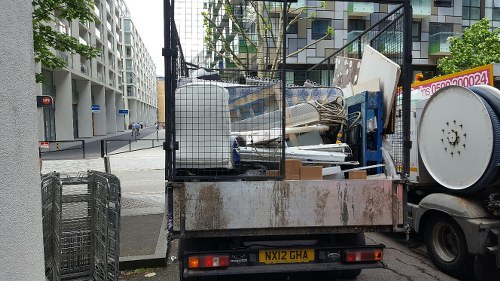
Vehicles used for house clearances and rubbish collection are inspected daily and maintained to a high standard. Secure loading procedures prevent shifting of loads in transit; drivers are trained in load restraint and safe driving practices. Equipment such as sack trucks, ramps and lifting aids are maintained and checked before use. Traffic risk assessments are completed where vehicle movements affect public ways.
Environmental controls are in place to prevent pollution and nuisance. Dust suppression, spill kits and secure containment ensure that operations do not cause contamination of soil or water. Waste transfer documentation is completed for all disposals, and items designated for reuse or recycling are segregated from general refuse.
 Monitoring and review processes ensure the policy remains effective. Routine audits, toolbox talks and performance reviews are used to track compliance and continual improvement. This policy will be reviewed at least annually or following a significant change in operations, incident, or regulation.
- Policy commitment: Maintain a safe working environment for all activities related to house clearance and rubbish removal.
- Training and competence: Provide and document training to ensure staff can perform tasks safely.
- Risk management: Carry out and record risk assessments and safe systems of work for every job.
- Incident management: Report, investigate and act on incidents to prevent recurrence.
- Environmental duty: Dispose and recycle waste responsibly and in accordance with legal obligations.
Signed on behalf of the company — This document summarises the health and safety arrangements for house clearance operations and related rubbish collection services across the service area. It is made available to employees and retained as the formal policy statement for operational teams and partners.